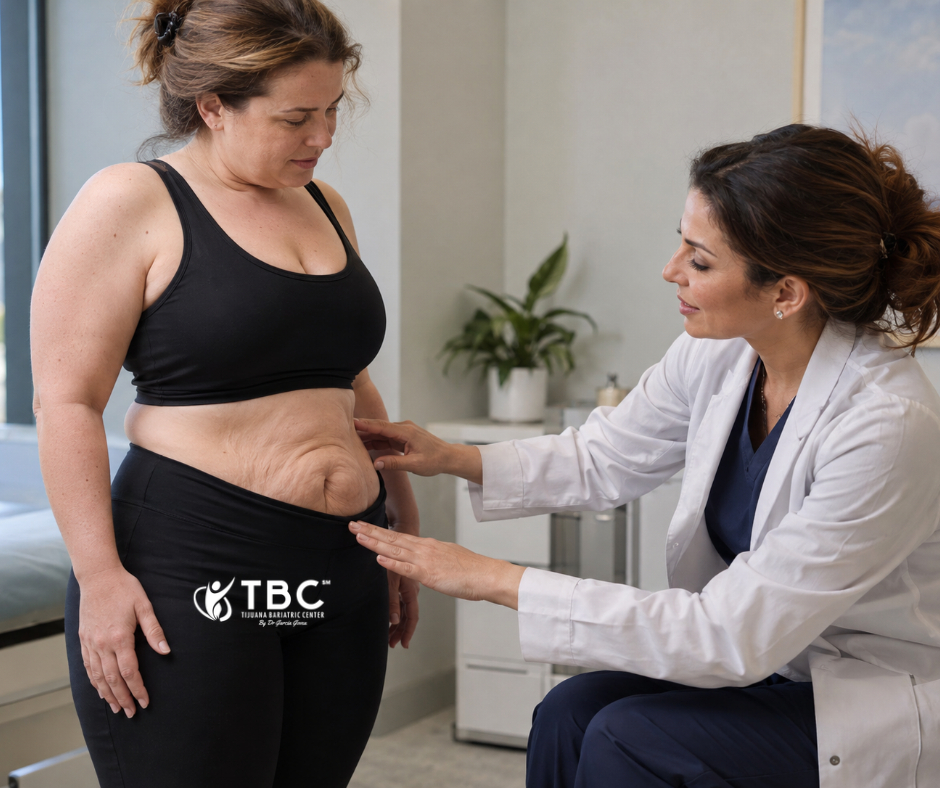
Losing a significant amount of weight after gastric sleeve surgery or gastric bypass surgery can change much more than the number on the scale. For some patients, one of the changes that remains after weight loss is loose or excess skin around the abdomen.
When skin and tissues have been stretched for a long period of time, they may not completely adapt to a smaller body size after major weight loss. This is one reason some bariatric patients eventually begin exploring a tummy tuck or other post-bariatric body-contouring procedures.
A tummy tuck after bariatric surgery is not automatically the next step for every patient. Weight stability, nutrition, overall health, previous surgery, and the areas you would like to address all become part of the evaluation.
Why Loose Abdominal Skin Can Remain After Bariatric Surgery
Gastric sleeve and gastric bypass can support substantial weight loss, but weight loss does not always cause stretched skin to tighten at the same rate.
After major weight loss, some patients may notice:
- Loose or hanging abdominal skin
- Skin folds around the lower abdomen
- Changes in abdominal contour
- A body shape that looks different from what they expected after losing weight
- Loose skin in other areas such as the arms, thighs, breasts, or upper body
This is why plastic surgery after major weight loss is often approached as body contouring after weight loss, rather than as another weight-loss treatment.
A tummy tuck focuses mainly on the abdomen. A broader post-bariatric body-contouring plan may evaluate several areas and determine whether they are best addressed individually or as part of a staged plan.
The American Society of Plastic Surgeons also notes that significant weight loss can leave skin and tissues without enough elasticity to fully conform to the body’s smaller size.
Is a Tummy Tuck Different After Gastric Sleeve or Gastric Bypass?
The main goal of a tummy tuck does not change simply because a patient previously had bariatric surgery. What changes is the amount of information the surgeon needs to consider when planning the procedure.
Your plastic surgeon will usually want to understand:
- Which bariatric procedure you had
- When your bariatric surgery was performed
- How much weight you have lost
- Whether your weight is still changing
- Your current medications and supplements
- Whether you have had previous abdominal surgery
- Your current nutritional status
- Any medical conditions that may affect healing
Gastric sleeve and gastric bypass can affect nutritional needs differently, so your bariatric history remains relevant even after the active weight-loss phase has slowed down.
When Can You Consider a Tummy Tuck After Bariatric Surgery?
There is no single number of months after gastric sleeve or gastric bypass that automatically makes someone ready for plastic surgery.
One of the most important considerations is whether your weight has become reasonably stable. If significant weight loss is still occurring, additional changes in body shape may continue after surgery.
The American Society of Plastic Surgeons lists stable weight, overall health, appropriate nutrition, realistic goals, and not smoking among the factors commonly considered when evaluating patients for body contouring after major weight loss.
Instead of focusing only on the calendar, a plastic surgery evaluation looks at the bigger picture. Is your weight stable? Are your nutritional needs being met? Are you medically prepared for another operation? And which areas are actually bothering you?
Which Plastic Surgery Options May Be Worth Discussing?
Tell us which areas you would like to improve, what changes matter most to you, and whether your goals are related to pregnancy, significant weight loss, facial aging, or body contouring.
Important: This tool is educational only. It does not diagnose, approve, recommend, or guarantee a procedure. A qualified plastic surgeon must review your health history, anatomy, goals, and surgical plan before determining which options may be appropriate.
Find the Procedures That Match Your Goals
This short guide will organize your concerns into procedures you may want to discuss with the TBC plastic surgery team.
Which areas would you like to improve?
Select all that apply.
What best describes the change you want?
Have you experienced significant weight loss?
Major weight loss can change how loose skin and body-contouring procedures are planned.
Which abdomen concern best matches your situation?
If your goals do not involve the abdomen, choose “Not a main concern.”
Which breast goal is closest to yours?
If your goals do not involve the breasts, choose “Not a main concern.”
Which face or neck concern best describes your goal?
If your goals do not involve the face or neck, choose “Not a main concern.”
What matters most to you when planning plastic surgery?
When are you considering plastic surgery?
Enter Your Information to View Your Results
Your personalized guide will show the procedures that may be worth discussing based on the areas and goals you selected.
Get clear guidance for your next conversation
Your answers will also be sent to the TBC team so a coordinator can follow up with more personalized information.
Your Options Are Ready to Review
Why These Options Came Up
Questions for Your Surgeon
Planning Notes
This guide is educational only. Procedure selection, whether multiple surgeries can be combined, scar location, recovery time, and surgical staging must be determined after a qualified plastic surgeon evaluates your anatomy, health history, goals, and safety considerations.
Why Nutrition Matters Before a Post-Bariatric Tummy Tuck
Nutrition deserves special attention after significant weight loss, particularly for patients who previously had bariatric surgery.
Before body-contouring surgery, the surgical team may review protein intake, vitamins, minerals, recent laboratory results, medications, and other factors related to healing.
Recent guidance highlighted by the American Society of Plastic Surgeons emphasizes nutrition screening for patients who have experienced significant weight loss. Adequate protein, vitamins, and minerals are important parts of preparing the body for healing.
Your evaluation may include discussion of:
- Protein intake
- Vitamins and supplements
- Recent laboratory results
- Weight stability
- Smoking or nicotine use
- Medications
- Previous bariatric follow-up
- Other health conditions
Depending on your history, your surgeon may ask for additional testing, medical clearance, or nutritional information before recommending surgery.
Tummy Tuck vs. Post-Bariatric Body Contouring
A tummy tuck can make sense when the main concern is concentrated around the abdomen. Major weight loss, however, often changes more than one area of the body.
Patients may also notice loose skin involving the:
- Upper arms
- Thighs
- Breasts
- Upper torso
- Back
- Lower body
In those situations, the question is not always simply, “Do I need a tummy tuck?” It may be more useful to ask which areas should be evaluated and whether treatment should happen together or in stages.
Post-Bariatric Body Contouring at TBC takes that broader approach. A tummy tuck may be one part of the plan without necessarily being the entire plan.
Can Several Plastic Surgery Procedures Be Combined?
Sometimes more than one area can be addressed as part of the same surgical plan. In other cases, the surgeon may recommend treating different areas in stages.
The decision depends on factors such as:
- The areas being treated
- The complexity of each procedure
- Expected surgical time
- Medical history
- Previous surgeries
- Recovery needs
- Mobility after surgery
- Overall safety
For patients who have already gone through major weight loss, the goal is not to fit as many procedures as possible into one surgery. The goal is to build a plan that makes sense for the patient’s body, priorities, health, and recovery.
What Recovery Can Look Like After a Post-Bariatric Tummy Tuck
Recovery varies according to the exact tummy tuck performed and whether another area is treated at the same time.
During the early healing period, patients may have temporary limits on lifting and activity and may receive instructions about incision care, gradual movement, follow-up, and compression when prescribed. These changes are part of the initial recovery period and generally become easier to manage as healing progresses.
For patients traveling to Tijuana, planning ahead can make this stage feel much more manageable. Before surgery, the TBC team can help explain the expected stay, what assistance may be useful, what to prepare for the first days, and when follow-up will take place.
You do not need to memorize a generic recovery calendar before deciding whether to request an evaluation. Your surgeon will provide instructions based on the procedure actually recommended for you.
For a broader overview, visit our Plastic Surgery Recovery in Tijuana guide.
Is a Tummy Tuck Another Weight-Loss Procedure?
No. Bariatric surgery and tummy tuck surgery have very different purposes.
Gastric sleeve and gastric bypass are procedures used to support weight loss and improve obesity-related health concerns. A tummy tuck is a body-contouring procedure designed to address the abdomen after changes such as pregnancy, weight fluctuation, or major weight loss.
For many post-bariatric patients, plastic surgery represents a different stage of the journey. The focus is no longer on losing additional weight but on evaluating the changes that remain after substantial weight loss.
Questions to Ask During Your Plastic Surgery Evaluation
If you are considering a tummy tuck after gastric sleeve or gastric bypass, it can help to arrive at your consultation with a few practical questions:
- Has my weight been stable long enough to consider surgery?
- Do I need nutritional testing before surgery?
- Is a tummy tuck enough for the areas I want to address?
- Should other body-contouring procedures be considered?
- Would my procedures be combined or performed in stages?
- What should I expect during recovery?
- How long would I need to remain in Tijuana?
- Would a companion be helpful?
- What information from my bariatric surgery should I provide?
- What should be confirmed before I make travel arrangements?
Two patients can have the same bariatric procedure and still need very different plastic surgery plans. That is why an individualized review is more useful than trying to choose a procedure based only on photos, timelines, or another patient’s experience.
From Bariatric Surgery to Body Contouring
For some patients, bariatric surgery marks the beginning of a major physical change. After the active weight-loss phase, new questions can appear about loose skin, abdominal contour, and other areas that changed along the way.
Plastic surgery does not continue the weight-loss process. Instead, it can provide an opportunity to evaluate those remaining changes and determine whether a tummy tuck in Tijuana, broader body contouring, or another approach may be worth discussing.
At Tijuana Bariatric Center’s Plastic Surgery program, patients who previously had gastric sleeve, gastric bypass, or another major weight-loss treatment can request an individualized review based on their health history, weight stability, goals, and the areas they would like to address.