Silicone Gel Implants
Silicone implants contain silicone gel within an outer shell. Patients may encounter different sizes, dimensions, profiles, and designs when researching breast augmentation.
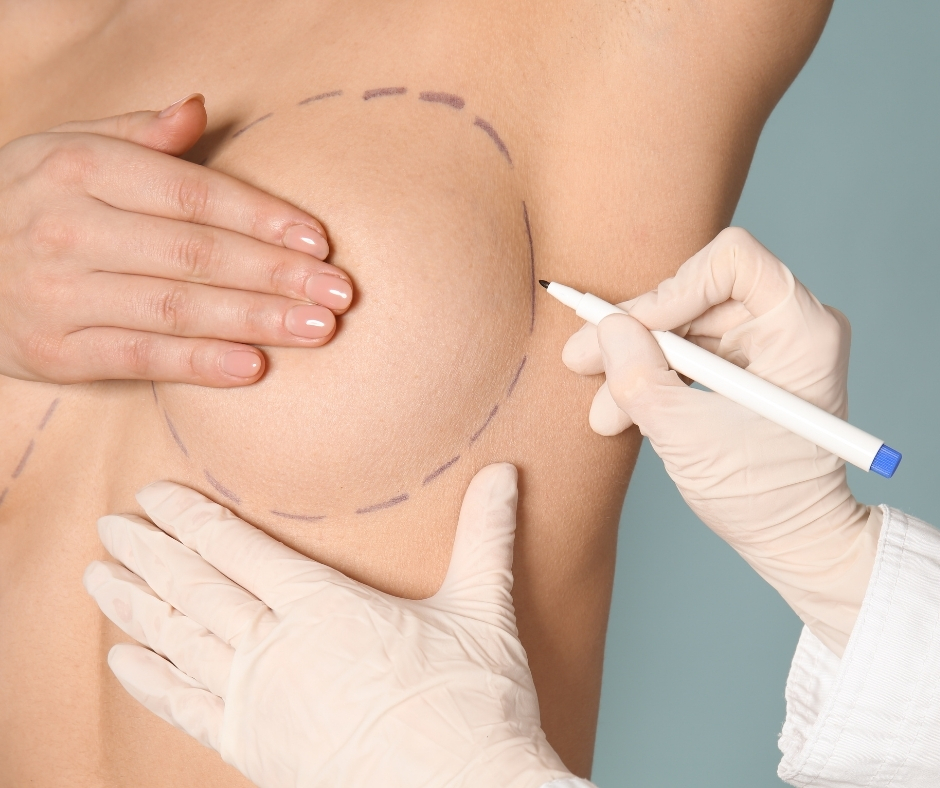
Breast shape and volume can change throughout life.
Pregnancy, breastfeeding, weight loss, aging, genetics, or naturally smaller breast development can influence how the breasts look and how a patient feels about her proportions.
Breast augmentation, also called augmentation mammoplasty, is a plastic surgery procedure designed to increase or restore breast volume.
Breast implants are commonly used to achieve this change, although the correct surgical plan depends on the patient's anatomy, existing breast tissue, skin quality, desired proportions, and long-term goals.
At Tijuana Bariatric Center, breast augmentation in Tijuana is performed by Dr. Héctor Guillermo Lino Ortiz and begins with a personalized evaluation rather than choosing an implant based only on a photograph, cup size, or number of cubic centimeters.
The goal is to determine which approach may create proportions that fit the individual patient's body and expectations.
Breast augmentation is a surgical procedure used to increase breast volume or restore volume that has been lost because of pregnancy, weight loss, aging, or other changes.
For many patients, this involves placing a breast implant.
Breast augmentation may be considered to:
What it does not automatically correct: Breast implants do not necessarily correct significant breast sagging.
Patients who have substantial loose skin or a lower breast position may need to discuss a breast lift, either instead of augmentation or as part of another surgical plan.
First step: The surgeon evaluates breast anatomy, skin, existing tissue, symmetry, chest dimensions, health history, and the patient's goals before recommending an implant or surgical plan.
Breast augmentation can be considered for several different reasons.
Some patients naturally have smaller breasts and want more volume.
Others have experienced changes after:
Common concerns can include:
However, the reason for surgery matters because two patients asking for “larger breasts” may require very different surgical plans.
Patients often begin their research by asking:
“What implant size should I get?”
Implant volume is important, but it is only one part of surgical planning.
The surgeon must also consider:
Two implants with the same volume can create different appearances depending on their dimensions and the patient's anatomy.
For this reason, choosing an implant should not be reduced to selecting a number of cubic centimeters from photographs found online.
The objective is to select a surgical plan that appropriately fits the patient's body.
Several characteristics can affect how a breast implant behaves and how the final breast contour may appear.
The exact implant devices available through TBC, including type, manufacturer, design, surface, sizes, and profiles, should be confirmed with Dr. Héctor Guillermo Lino Ortiz as part of the individual surgical plan.
Silicone implants contain silicone gel within an outer shell. Patients may encounter different sizes, dimensions, profiles, and designs when researching breast augmentation.
Saline implants contain sterile saline solution within an outer shell. Availability and suitability depend on the individual patient, surgeon, implant manufacturer, regulatory requirements, and surgical plan.
These implant types are presented for educational purposes only. TBC should not represent a particular implant type or device as available until the specific implant plan has been confirmed.
Implant size usually refers to implant volume.
However, volume alone does not determine how wide or projected an implant will appear.
The same number of cubic centimeters can be distributed differently across implants with different dimensions.
Implant profile describes how the implant's dimensions distribute its volume and projection.
An implant may have:
The surgeon evaluates these dimensions in relation to the patient's chest and existing breast tissue.
This is why requesting a specific implant solely because another patient received that size may not produce the same result.
Patients may encounter several terms when researching breast implant placement.
Depending on anatomy and surgical technique, an implant may be positioned in relation to breast tissue and the chest muscle in different ways.
The implant is positioned in relation to the breast tissue and above the chest muscle. Whether this approach is appropriate depends on anatomy, tissue coverage, implant characteristics, and the surgeon’s technique.
The implant is positioned in relation to the chest muscle. The exact surgical relationship can vary according to the technique used and the patient’s anatomy.
Dual-plane terminology describes techniques in which the implant has a specific relationship with both the chest muscle and breast tissue. The exact technique varies and should be explained by the surgeon when applicable.
The appropriate position may depend on:
Specific implant positions used by Dr. Lino should be confirmed during the surgical evaluation.
Implant placement should be chosen according to anatomy rather than assuming one position is universally superior.
Breast augmentation requires an incision.
Patients may encounter several incision approaches during their research.
An incision located within or near the natural breast fold.
An incision positioned around part of the border of the areola.
An incision placed through the armpit area.
The incision selected can depend on:
Every incision creates a scar.
The goal is to plan the incision in a location appropriate for the surgery while considering both tissue access and future scar visibility.
The specific incision approaches used by Dr. Lino should be confirmed before they are presented as standard TBC techniques.
Primarily adds or restores volume.
It can help improve:
Primarily changes breast position and shape by removing loose skin and reshaping breast tissue.
It can help address:
Some patients experience both.
This is particularly common after pregnancy, breastfeeding, significant weight loss, bariatric surgery, or aging.
In these cases, breast implants alone may not adequately correct the lower position of the breast.
The surgeon may discuss whether:
may better match the patient's anatomy and goals.
Potentially.
A combined breast augmentation and breast lift may be considered when a patient wants both additional breast volume and correction of loose or sagging tissue.
This type of surgical strategy is sometimes called augmentation mastopexy.
Performing two different changes at the same time makes surgical planning more complex.
The surgeon must consider:
Whether Dr. Lino recommends simultaneous augmentation and mastopexy should be determined individually. We should not present a combined technique as a standardized TBC protocol until his criteria are confirmed.
Pregnancy and breastfeeding can change breast volume and skin elasticity.
Some women notice:
Breast augmentation may help restore volume when volume loss is the primary concern.
However, if significant loose skin or breast sagging is also present, a breast lift may need to be considered.
Timing is important.
Patients who recently gave birth or breastfed should allow the breasts and body to stabilize before elective surgery is evaluated.
Patients considering another pregnancy should also understand that future pregnancy may change augmented breasts.
The surgeon should determine appropriate timing according to the patient's individual situation.
Major weight loss can significantly change breast volume.
This may occur after:
Some patients are primarily left with reduced breast volume.
Others have both:
These are different problems.
A patient whose breast position remains appropriate but has lost volume may be evaluated for breast augmentation.
A patient with substantial sagging may require a breast lift, with or without augmentation.
For post-bariatric patients, Dr. Lino may also consider:
Breast augmentation is highly individualized.
An evaluation may be appropriate for adults who:
Not every patient who wants more breast volume is automatically a candidate for implants.
The surgeon must consider the patient's health, breast anatomy, skin, goals, and long-term expectations.
The exact technique depends on the patient's individualized surgical plan.
A breast augmentation may generally include the following stages.
Before surgery, the surgeon evaluates:
The anesthesia plan is determined according to the procedure, medical evaluation, and surgical setting.
The surgeon creates the planned incision to provide access for implant placement.
The exact incision should be discussed before surgery.
A surgical pocket is created according to the planned implant position.
The technique depends on anatomy and the surgeon's approach.
The selected implant is positioned according to the surgical plan.
Implant selection should be finalized only after appropriate measurements and evaluation.
The incision is closed in layers.
Dressings and a surgical or support bra may then be used according to the surgeon's postoperative protocol.
Breast augmentation requires an incision and therefore creates a permanent scar.
The scar's location depends on the surgical approach.
Scar appearance can be influenced by:
Scars often become less noticeable over time but do not completely disappear.
The anticipated incision should be discussed before surgery.
Patients should be cautious of claims describing implant surgery as completely “scarless.”
No.
Breast implants are not lifetime devices.
A patient should not undergo breast augmentation assuming that her implants will necessarily remain unchanged for the rest of her life.
Over time, additional evaluation or surgery may become necessary because of:
Some patients may keep their implants for many years without needing replacement simply because a certain number of years has passed.
Others may require earlier intervention.
Breast augmentation creates a long-term relationship with breast and implant monitoring, not simply one operation.
The body naturally forms scar tissue around a breast implant. This tissue is called a capsule.
In some patients, the capsule can tighten around the implant.
This is called capsular contracture.
Depending on severity, it can contribute to:
Capsular contracture is a recognized complication associated with breast implants and may require additional treatment or surgery.
Yes.
Breast implants can rupture or, in the case of saline implants, deflate.
How rupture presents depends partly on the implant type.
A silicone implant rupture may sometimes occur without obvious symptoms, often described as a silent rupture.
This is one reason long-term follow-up and appropriate implant surveillance are important.
Patients should receive information about:
Patients should continue routine breast-health screening according to their age, personal history, and medical recommendations.
Breast implants do not replace or eliminate routine breast-health care.
Silicone implants may also require imaging specifically to evaluate implant integrity.
The appropriate imaging schedule depends on:
Patients should receive a long-term follow-up plan after surgery and should tell providers performing future breast imaging that they have implants.
Women with breast implants still need appropriate breast-health screening.
Breast implants can affect how mammography is performed, and additional views may sometimes be required.
Patients should tell the imaging facility that they have breast implants when scheduling and arriving for breast imaging.
The surgeon may also request breast imaging before augmentation depending on:
Dr. Lino's specific preoperative breast-imaging protocol should be confirmed as part of the individual evaluation.
Recovery varies according to surgical technique, implant position, implant dimensions, patient anatomy, whether another procedure was performed, and individual healing.
Patients may experience:
Dressings and a support or surgical bra may be used according to the postoperative plan.
Instructions may address:
Patients gradually increase activity according to the surgeon's instructions.
Heavy lifting, upper-body exercise, strenuous activity, and movements that place unnecessary stress on the surgical area may remain restricted.
Swelling does not disappear immediately, and implants may initially appear different from their later position as healing progresses.
Return to work depends on:
Patients with physically demanding jobs may require more recovery than those performing non-physical work.
Walking may be encouraged during recovery when medically appropriate.
More strenuous activities, especially those involving the upper body or chest, should resume only after surgical clearance.
The patient's individual postoperative instructions always take priority over a generic recovery timeline.
Breast volume changes immediately after implant placement, but the appearance immediately following surgery is not necessarily the final result.
During early recovery:
The breasts can continue changing as swelling decreases and tissues adapt.
Scars also continue maturing for many months.
Patients should allow adequate healing time before evaluating the final contour.
Photographs can help a patient communicate preferences, but they cannot determine the correct implant.
A result seen on another patient depends on:
The same implant can look very different on two different patients.
Instead of asking:
“Can I have exactly these breasts?”
A more useful consultation may discuss:
Reference photos can guide communication, but they should not become guarantees.
Breast augmentation may be considered as part of a Mommy Makeover when pregnancy or breastfeeding has resulted in loss of breast volume.
Depending on the patient, the overall plan may involve:
Not every procedure needs to be performed at the same time.
The surgeon considers:
Breast augmentation is elective surgery involving an implanted medical device when implants are used.
Potential risks can include:
Breast implants are also associated with uncommon but important implant-specific risks that should be discussed during informed consent.
The patient should receive information about the specific implant proposed for her surgery and have an opportunity to discuss:
Results vary from patient to patient, and neither a specific breast appearance nor a complication-free lifetime with implants can be guaranteed.
Breast implant safety should be discussed before selecting a device.
A responsible breast augmentation consultation should include long-term considerations, not only implant size and immediate appearance.
Dr. Héctor Guillermo Lino Ortiz provides plastic surgery procedures through Tijuana Bariatric Center, including breast augmentation, breast lift, tummy tuck, Mommy Makeover, and post-weight-loss body contouring.
He is listed in the directory of the Mexican Association of Plastic, Aesthetic and Reconstructive Surgery (AMCPER) as a Lifetime Member in Tijuana, Baja California, with Certification Number 204.
For breast augmentation patients, his evaluation considers:
The goal is to determine whether breast augmentation alone, breast lift, augmentation with lift, or another breast surgery strategy may appropriately address the patient's concerns.
The cost of breast augmentation in Tijuana depends on the individual surgical plan.
Factors may include:
Once Dr. Héctor Guillermo Lino Ortiz has evaluated the patient's case and recommended a treatment plan, TBC can provide personalized pricing and explain what is included before surgery is scheduled.
You do not need to choose an implant size before contacting TBC.
Explain whether your goal involves:
You can explain whether your priority is:
Reference photographs may help explain preferences, but they do not guarantee the same result.
Relevant information can include:
The surgical team may request:
Dr. Héctor Guillermo Lino Ortiz evaluates the information and considers whether:
may be appropriate.
If augmentation is recommended, the consultation should explain:
The coordinator can then explain:
Do not purchase flights or make nonrefundable travel reservations until the procedure, implant plan, medical requirements, facility, surgical date, and travel plan have been confirmed.
Tijuana Bariatric Center assists patients traveling from the United States, Canada, and other locations who want to understand both surgery and travel requirements before making a decision.
Before traveling, patients should know:
The final travel plan should follow Dr. Lino's protocol and the actual procedure rather than a generic medical-tourism timeline.

If loose skin, breast sagging, or nipple position is a major concern, a breast lift may deserve consideration instead of or in addition to augmentation.
Patients who want to address changes involving both the breasts and abdomen may be evaluated for a broader Mommy Makeover plan.
Patients who have lost significant weight may have both volume loss and loose skin involving several areas of the body.
Breast augmentation, or augmentation mammoplasty, is surgery used to increase or restore breast volume. Breast implants are commonly used to create the additional volume.
Breast augmentation is the surgical procedure. Breast implants are medical devices commonly used to create additional breast volume during the procedure.
Not necessarily. Breast augmentation primarily adds volume. Patients with significant sagging or excess skin may require a breast lift with or without implants.
Potentially, yes, when adding volume appropriately addresses the patient’s goals and the breast position and skin do not require significant lifting. The surgeon determines this after evaluating the breast anatomy.
Potentially. A combined augmentation mastopexy may be considered when a patient wants both additional volume and correction of breast sagging. Whether the procedures should be performed together depends on the individual surgical plan.
Implant selection should consider more than volume. Chest width, breast dimensions, existing tissue, skin, implant profile, desired projection, and overall proportions are also important. Dr. Lino should recommend implant dimensions after evaluating the individual patient.
No. A larger implant does not automatically create a better result. Implants that do not appropriately match the patient’s tissues and anatomy can create different aesthetic and long-term considerations. The objective is to select a proportionate implant and surgical plan.
Neither option should be considered universally better for every patient. Each implant type has different characteristics and considerations. Availability through TBC and the implant recommended for an individual patient should be discussed with Dr. Lino.
Potentially. Breast augmentation may restore volume lost following pregnancy or breastfeeding. The body and breasts should first be allowed to stabilize, and patients should discuss future pregnancy plans with the surgeon.
Potentially. Patients who lose significant breast volume after bariatric surgery may be evaluated for augmentation. If substantial loose skin or sagging is present, a breast lift may also need to be considered. Weight stability, nutrition, health, and anatomy should be evaluated first.
Yes. Breast augmentation requires an incision and therefore creates a permanent scar. Its location depends on the surgical technique.
Breast implants are not lifetime devices. There is no universal expiration date at which every implant must automatically be replaced, but complications, changes in breast tissue, implant condition, or patient preference may require additional surgery in the future.
Not automatically. Breast implants do not have a universal rule requiring replacement exactly every ten years. However, they require long-term monitoring and may eventually need revision, removal, or replacement.
Yes. Implant rupture or deflation can occur. Patients should understand how the specific implant they receive should be monitored and what symptoms should prompt evaluation.
Capsular contracture occurs when the scar tissue naturally formed around an implant tightens more than expected. It can make the breast feel firm, alter breast shape, affect implant position, or create discomfort in some patients.
Women with breast implants should continue appropriate breast-health screening. The imaging facility should be told about the implants because additional mammographic views or other techniques may sometimes be required.
Some women can breastfeed after breast augmentation, but the effect can vary according to anatomy, incision, surgical technique, and individual circumstances. Patients who plan to breastfeed in the future should discuss this with the surgeon before surgery.
The changes can be long-lasting, but breast implants are not lifetime devices and the breasts continue changing with aging, pregnancy, hormones, gravity, and weight fluctuations. Additional surgery may be required in the future.
Recovery varies according to implant position, surgical technique, anatomy, additional procedures, and individual healing. Dr. Lino should provide a personalized timeline for work, exercise, lifting, travel, and follow-up.
Pricing depends on the implant, surgical technique, facility, anesthesia, medical requirements, whether a lift is required, expected stay, and package inclusions. TBC can provide individualized pricing after the surgical evaluation.
Breast augmentation procedures through Tijuana Bariatric Center are performed by Dr. Héctor Guillermo Lino Ortiz, a plastic surgeon listed by AMCPER as a Lifetime Member in Tijuana, Baja California, Certification Number 204.
Yes. International patients can begin by providing the information requested for a remote surgical review. The implant plan, procedure, facility, medical requirements, expected stay, package, pricing, and travel arrangements should be confirmed before flights are purchased.
Choosing breast augmentation involves more than deciding whether you want larger breasts.
The implant, dimensions, surgical technique, breast position, existing tissue, and long-term plan should all be considered together.
You do not need to choose an implant before requesting an evaluation.
Start by telling us what has changed and what you would like to achieve.
Our team can help organize the information Dr. Héctor Guillermo Lino Ortiz needs to evaluate your case and explain whether breast augmentation, breast lift, a combination of both, or another breast surgery strategy may appropriately address your goals.
Request a Breast Augmentation Evaluation
Explore Breast Surgery Options
Your implant should fit your anatomy, your goals, and your long-term plan.