1. Surgical Planning
The surgeon evaluates the arm from the elbow through the underarm and, when relevant, the lateral chest.
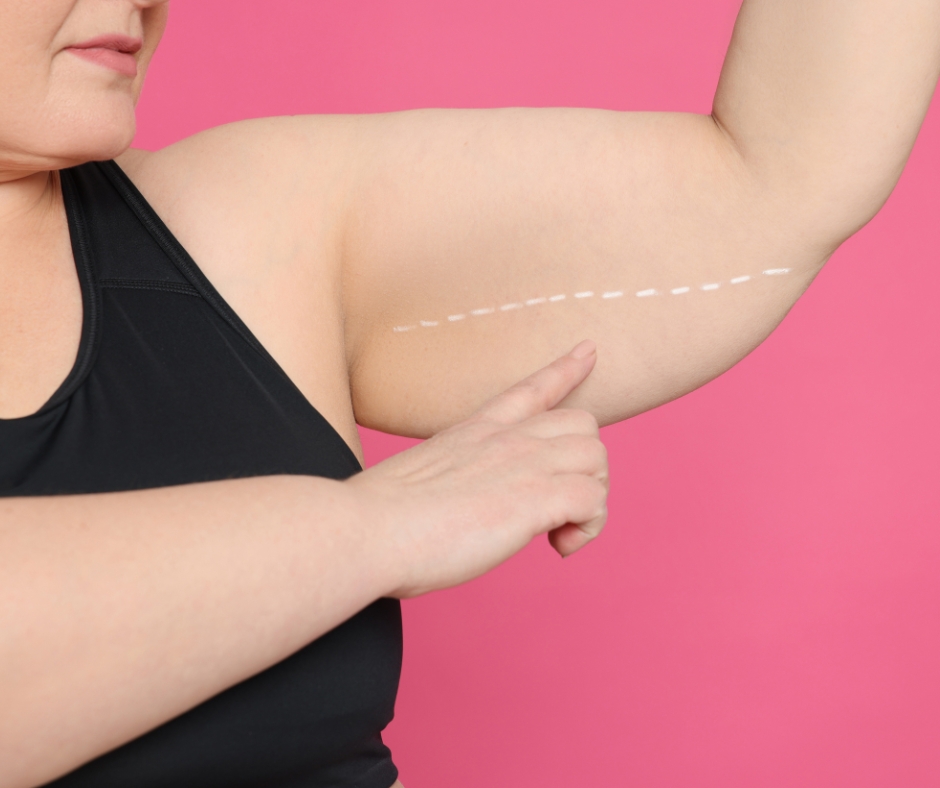
Significant weight loss can transform your health and body, but the skin of the upper arms does not always contract enough to match your new size.
Loose or hanging upper-arm skin may remain after bariatric surgery, major weight loss, aging, or significant weight fluctuations.
An arm lift, medically known as brachioplasty, is a plastic surgery procedure designed to remove excess skin and reshape the upper arm.
At Tijuana Bariatric Center, arm lift surgery in Tijuana is evaluated by Dr. Héctor Guillermo Lino Ortiz as part of TBC's expanding plastic surgery and post-weight-loss body-contouring program.
The first step is not deciding how much skin should be removed.
It is understanding your anatomy, weight-loss history, health, skin distribution, scars, and what you want to improve.
An arm lift, or brachioplasty, reshapes the upper arm by removing loose or sagging skin and tightening the underlying supporting tissues.
Depending on the patient's anatomy, localized fat may also be addressed as part of the surgical plan.
An arm lift may be considered for:
What it is not: An arm lift is not a weight-loss operation.
First step: A plastic surgeon evaluates the amount and location of loose skin, existing fat, weight stability, health, scars, and the patient's goals.
Exercise can strengthen upper-arm muscles, but it cannot make substantially stretched skin disappear.
After significant weight loss, the arm may become smaller while the skin that previously covered a larger volume remains.
The amount of excess skin can depend on:
This is why patients who have achieved similar weight loss can have very different arm contours.
Arm lift surgery may improve:
For some post-bariatric patients, loose tissue does not stop at the arm.
It can extend toward:
Those patients may require a broader body-contouring evaluation rather than an isolated arm procedure.
Brachioplasty is especially relevant for patients who have experienced substantial weight loss.
After gastric sleeve, gastric bypass, medical weight management, GLP-1 treatment, or lifestyle-based weight loss, patients may notice that their arms remain disproportionately loose despite reaching a much smaller body size.
For post-weight-loss patients, the evaluation may include:
If several areas are involved, the surgeon can determine whether brachioplasty should be performed alone, combined with another procedure, or incorporated into a staged body-contouring plan.
An evaluation may be appropriate for adults who:
Post-bariatric patients may also require evaluation of nutrition and previous weight-loss surgery before elective plastic surgery is recommended.
A personalized surgical review is necessary to determine whether brachioplasty is appropriate for your health, anatomy, and goals.
The exact operation depends on where the excess skin is located and how extensive it is.
The surgeon evaluates the arm from the elbow through the underarm and, when relevant, the lateral chest.
The anesthesia plan is determined according to the procedure and the patient's health evaluation.
The incision length depends largely on how much loose skin must be removed.
Incisions may be positioned along the inner or posterior aspect of the upper arm depending on the surgical approach.
Loose skin is removed and underlying supportive tissues are reshaped.
Localized fat may sometimes be treated when appropriate.
The remaining skin is redraped over the new contour and the incisions are closed.
The incision length and pattern depend on the amount and location of excess skin.
The final technique and anticipated scar should be explained before the patient decides to proceed.
Patients may encounter several brachioplasty terms while researching arm skin-removal surgery.
A shorter incision may sometimes be considered when loose skin is concentrated closer to the underarm. Whether this approach can provide adequate correction depends on the location and amount of excess tissue.
A standard arm lift generally addresses more substantial loose skin extending farther down the upper arm. The required incision depends on the amount and distribution of excess skin.
After major weight loss, excess tissue can sometimes extend from the upper arm toward the underarm or lateral chest. A more extensive body-contouring approach may therefore be considered.
A shorter scar is not automatically a better procedure if it does not adequately address the amount of loose skin present.
These approaches are described for educational purposes. The specific brachioplasty techniques offered by Dr. Lino through TBC should be confirmed before being presented as standard treatment options.
Primarily addresses:
Liposuction cannot remove a large amount of loose skin.
For some patients, liposuction and brachioplasty may be used together, but the appropriate approach depends on anatomy and the surgeon's evaluation.
Do not assume that removing fat alone will correct substantial hanging skin after major weight loss.
This is one of the most important trade-offs to understand before brachioplasty.
Removing substantial hanging skin requires an incision.
In more extensive arm-lift procedures, the scar may extend from near the underarm toward the elbow along the inner or posterior portion of the arm.
Post-weight-loss cases involving more extensive skin laxity may require a longer incision.
Arm lift scars:
Patients should understand the anticipated scar before deciding whether the expected improvement in arm contour is worth that trade-off.
Loose upper-arm tissue can affect more than appearance.
Some patients experience:
These concerns should be discussed during the evaluation.
Active rashes, infections, or wounds should also be medically evaluated before elective surgery.
Recovery depends on the extent of surgery and whether another procedure is performed at the same time.
Depending on the surgical plan, patients may have:
Instructions can include:
Because the arms are used constantly for everyday activities, patients should plan for temporary restrictions involving:
Swelling improves gradually and scars continue to mature over many months.
The appropriate timeline for lifting, work, exercise, and travel should be based on the actual procedure and individual healing.
Dr. Lino's individual postoperative protocol should take priority over a generic recovery timeline.
Potentially.
Post-weight-loss patients may also be evaluating:
Whether procedures should be combined depends on:
Patients with extensive upper-arm and upper-torso laxity may sometimes be better evaluated for a broader upper-body-contouring strategy.
The goal is not to perform the greatest number of procedures at once. The goal is to establish an appropriate treatment and recovery plan.
Brachioplasty is a surgical procedure and requires appropriate medical evaluation and informed consent.
Potential arm-lift risks can include:
Individual risk depends on:
No specific aesthetic result or complication-free recovery can be guaranteed.
Dr. Héctor Guillermo Lino Ortiz provides plastic surgery and post-bariatric body-contouring procedures through Tijuana Bariatric Center.
He is listed by the Mexican Association of Plastic, Aesthetic and Reconstructive Surgery (AMCPER) in Tijuana, Baja California, as a Lifetime Member, Certification Number 204.
His TBC plastic surgery services include:
For arm-lift patients, his evaluation considers the distribution of excess skin, weight-loss history, upper-torso involvement, health, and whether an isolated or broader body-contouring procedure may be appropriate.
Arm-lift cost varies according to the individual surgical plan.
Factors can include:
TBC can provide personalized pricing after Dr. Lino reviews the individual case and establishes a proposed surgical plan.
You do not need to decide whether you require limited, standard, or extended brachioplasty before contacting TBC.
Explain whether your concern is primarily:
Include bariatric surgery, weight-loss medications, or other major weight changes when applicable.
Provide information about:
The team may request photographs, medical records, laboratory testing, weight history, or other relevant information.
Dr. Lino determines whether brachioplasty may be appropriate and whether the procedure should be limited, more extensive, or part of broader body-contouring planning.
TBC can then explain:
Do not purchase flights or make nonrefundable travel arrangements until your procedure, medical requirements, facility, surgery date, and travel plan have been confirmed.
International arm-lift patients should plan for both surgery and early postoperative recovery before returning home.
Before traveling, patients should understand:
The final travel and recovery plan should follow Dr. Lino's actual surgical protocol rather than a generic timeline.

When loose skin extends beyond the upper arm toward the underarm, side of the chest, or upper torso, a broader body-contouring evaluation may be appropriate.
Brachioplasty is the medical name for arm-lift surgery. It removes and reshapes loose upper-arm tissue to improve contour.
Exercise can improve muscle tone but cannot remove substantial excess skin that has lost elasticity.
Potentially. Weight stability, nutrition, health, and the amount of loose skin should be evaluated before elective plastic surgery is recommended.
Its main purpose is excess-skin removal and reshaping. Localized fat may also be addressed in selected surgical plans when appropriate.
Liposuction removes localized fat. Brachioplasty addresses substantial loose skin. Patients with poor skin elasticity may not obtain the desired contour from liposuction alone.
More extensive brachioplasty generally requires a longer incision. The expected scar depends on the amount and distribution of excess skin.
Not necessarily. The surgeon can strategically plan the incision, but a permanent scar should be expected.
Sometimes the laxity extends beyond the upper arm. In these cases, a more extensive brachioplasty or upper-body-contouring strategy may need to be considered.
Potentially, depending on the procedures, health, surgical time, recovery requirements, and the surgeon’s recommendation.
Recovery varies according to surgical extent and individual healing. Dr. Lino should provide the specific lifting, work, exercise, and travel timeline.
Pricing depends on the extent of surgery, facility, anesthesia, medical requirements, additional procedures, recovery needs, and package inclusions.
Arm-lift cases through Tijuana Bariatric Center are evaluated by Dr. Héctor Guillermo Lino Ortiz, who is listed by AMCPER in Tijuana, Baja California, as a Lifetime Member with Certification Number 204.
Loose upper-arm skin can remain even after you have done the work of losing a significant amount of weight.
You do not need to decide whether you require standard or extended brachioplasty before contacting us.
Start by showing us what you would like to address.
Our team can help organize the information Dr. Héctor Guillermo Lino Ortiz needs to evaluate your arms, weight-loss history, health, and broader body-contouring needs.
Request an Arm Lift Evaluation
Explore Post-Bariatric Body Contouring
The right procedure begins with understanding how your body changed.