Choosing where to have plastic surgery is about much more than finding an appealing before-and-after photo or comparing prices.
For patients traveling from the United States or Canada, plastic surgery in Tijuana can provide access to different facial and body procedures in a location close to Southern California. At the same time, traveling for surgery means patients should understand who will perform the procedure, where it will take place, what the evaluation involves, how recovery will be managed, and what happens after they return home.
A better decision starts with asking the right questions before making travel arrangements or choosing a procedure.
Start With the Surgeon, Not the Package
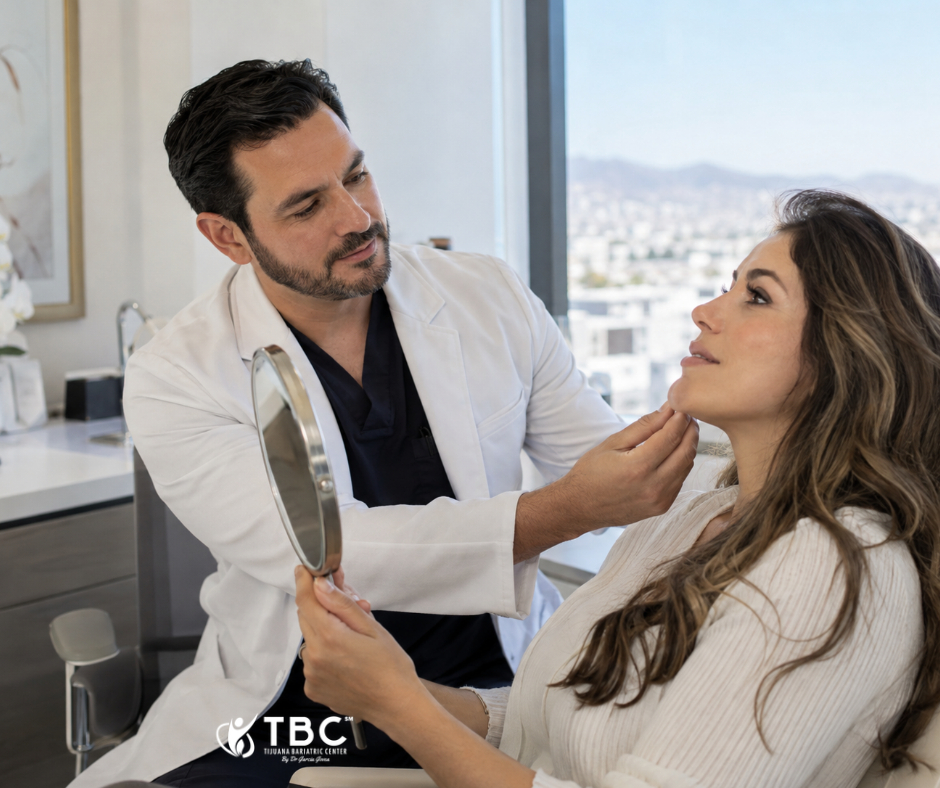
The first thing to evaluate should be the surgeon who will actually perform your procedure.
Look at the surgeon’s specialty training, professional credentials, experience with the procedure you are considering, and whether those credentials can be independently verified.
In Mexico, plastic surgery specialists can hold certification through the Consejo Mexicano de Cirugía Plástica, Estética y Reconstructiva. Current certification involves specialty credentials, professional documentation, and continuing professional requirements.
A surgeon can have extensive experience in one area and a different level of focus in another, so procedure-specific experience matters.
Someone considering a tummy tuck should ask about abdominal contouring experience. A patient researching facial rejuvenation should understand the surgeon’s experience with the specific facelift technique being offered, such as a Deep Plane Facelift.
You can also review the TBC providers before requesting an evaluation.
Understand Where the Surgery Will Take Place
The facility is another important part of the decision.
Ask where surgery is performed, what type of facility it is, who provides anesthesia, how patients are monitored after surgery, and what protocols are available if additional medical attention is needed.
The American Society of Plastic Surgeons explains that surgical facility standards include factors such as equipment, operating-room safety, personnel, and surgeon credentials.
Facility credentials do not guarantee a particular cosmetic result, but patients should still understand the environment in which their procedure will take place.
A Real Evaluation Should Come Before a Surgical Plan
Be cautious when a major surgical recommendation appears to be based only on a few messages or on the procedure a patient initially asks for.
A plastic surgery evaluation may include medical history, previous surgery, medications, current health conditions, smoking or nicotine use, photographs, anatomy, skin quality, goals, and other factors relevant to the procedure.
The surgeon may determine that the treatment you initially researched is appropriate, but sometimes the evaluation changes the plan.
That is especially relevant for post-bariatric patients. Someone who lost a substantial amount of weight may believe a tummy tuck will address everything that concerns them, while an evaluation may identify changes involving several areas.
In those cases, a broader Post-Bariatric Body Contouring evaluation may make more sense.
Look at Before-and-After Photos With Context
Before-and-after photos can be useful, but they should not be treated as a promise.
Look for patients with similar concerns and the same type of procedure you are considering. Pay attention to consistency and natural-looking outcomes rather than searching for a result you expect your own body or face to reproduce exactly.
Every patient begins with different anatomy, skin quality, age, medical history, and goals.
A good consultation should help you understand what may be realistic for your individual case.
You can explore Plastic Surgery Before & After results from Tijuana Bariatric Center as part of your research.
Recovery Planning Matters Before Surgery
Patients often focus heavily on surgery day and leave recovery questions until the end.
It is better to discuss them early.
Ask how long you are expected to stay in Tijuana, when your first follow-up occurs, what help may be useful during the first days, when travel home may be considered, and how communication works after you leave Mexico.
Recovery does not need to feel intimidating when expectations are explained clearly in advance. The early healing period is temporary, and having a plan for accommodations, follow-up, medications, movement, and travel can make the process feel much more manageable.
Our Plastic Surgery Recovery in Tijuana guide explains the broader recovery process and how patients can prepare before surgery.
Traveling for Surgery Requires Planning
When your surgeon is in another country, travel becomes part of the medical plan.
The CDC medical tourism guidance recommends researching both the healthcare professional and the facility, planning follow-up care, maintaining medical records, and considering the additional needs associated with traveling after surgery.
This does not mean traveling for surgery has to feel complicated.
It means you should know the plan before arriving.
Ask how you will get from San Diego to Tijuana, where you will stay, whether a companion may be helpful, how long you should remain nearby, and who you should contact if questions come up after returning home.
TBC patients can also review the Traveling Patients guide when planning their trip.
Compare What the Quote Actually Includes
The lowest price is rarely enough information to compare plastic surgery programs.
Ask whether the quote includes surgeon fees, anesthesia, facility fees, postoperative visits, garments when applicable, medications, hotel, transportation, or other services.
Also ask what is not included.
Two quotes can appear very different until you realize they cover different things.
Clear pricing makes it easier to evaluate the complete experience rather than making a decision based only on the number at the bottom of the page.
Communication Should Feel Clear Before You Travel
You should know who will answer your questions before surgery and how communication will work once you arrive.
A coordinator cannot replace the surgeon’s medical judgment, but the coordination team can make the process easier by helping with paperwork, scheduling, transportation, accommodations, appointments, and general preparation.
Medical questions should be addressed by the appropriate clinical team.
Clear roles and communication become particularly important when patients are traveling internationally.
Do Not Choose a Procedure Only Because It Is Popular
Plastic surgery trends change quickly.
A procedure that appears frequently on social media may not necessarily address your anatomy or goals.
For example, facial aging can involve skin laxity, deeper tissue descent, the jawline, neck, or several of these together. Patients researching facial rejuvenation may benefit from learning how procedures such as an Endoscopic Deep Plane Facelift are evaluated rather than selecting a technique based only on popularity.
The same principle applies to body procedures. A tummy tuck, Mommy Makeover, or body-contouring plan should be based on the patient’s anatomy and goals rather than on a package name.
Which Plastic Surgery Options May Be Worth Discussing?
Tell us which areas you would like to improve, what changes matter most to you, and whether your goals are related to pregnancy, significant weight loss, facial aging, or body contouring.
Important: This tool is educational only. It does not diagnose, approve, recommend, or guarantee a procedure. A qualified plastic surgeon must review your health history, anatomy, goals, and surgical plan before determining which options may be appropriate.
Find the Procedures That Match Your Goals
This short guide will organize your concerns into procedures you may want to discuss with the TBC plastic surgery team.
Which areas would you like to improve?
Select all that apply.
What best describes the change you want?
Have you experienced significant weight loss?
Major weight loss can change how loose skin and body-contouring procedures are planned.
Which abdomen concern best matches your situation?
If your goals do not involve the abdomen, choose “Not a main concern.”
Which breast goal is closest to yours?
If your goals do not involve the breasts, choose “Not a main concern.”
Which face or neck concern best describes your goal?
If your goals do not involve the face or neck, choose “Not a main concern.”
What matters most to you when planning plastic surgery?
When are you considering plastic surgery?
Enter Your Information to View Your Results
Your personalized guide will show the procedures that may be worth discussing based on the areas and goals you selected.
Get clear guidance for your next conversation
Your answers will also be sent to the TBC team so a coordinator can follow up with more personalized information.
Your Options Are Ready to Review
Why These Options Came Up
Questions for Your Surgeon
Planning Notes
This guide is educational only. Procedure selection, whether multiple surgeries can be combined, scar location, recovery time, and surgical staging must be determined after a qualified plastic surgeon evaluates your anatomy, health history, goals, and safety considerations.
Bariatric Patients May Have Additional Considerations
TBC also works with patients who previously underwent bariatric surgery and later begin exploring plastic surgery after major weight loss.
For these patients, weight stability, nutrition, previous surgery, loose-skin distribution, and overall health can become part of the plastic surgery evaluation.
That connection between bariatric care and plastic surgery is one reason post-bariatric patients may benefit from discussing their complete medical and weight-loss history rather than treating plastic surgery as an unrelated procedure.
Patients in this stage can explore body contouring after major weight loss to understand how several areas may be evaluated together.
Take Your Time Before Making the Decision
Choosing plastic surgery in Tijuana should not feel like choosing between advertisements.
Start with the surgeon. Understand the facility. Review realistic results. Ask about evaluation, recovery, travel, follow-up, and the complete price.
Most importantly, make sure you understand why a particular procedure is being recommended for you.
At Tijuana Bariatric Center, patients interested in facial or body procedures can begin with an individualized evaluation and learn about their options before making a scheduling decision.