What Is VSG Surgery?
VSG surgery, or vertical sleeve gastrectomy, is a bariatric procedure commonly known as gastric sleeve surgery. It reduces the size of the stomach to help patients eat smaller portions, feel full sooner, and support long-term weight loss. VSG is the standard abbreviation for vertical sleeve gastrectomy.
During VSG surgery, our world-class bariatric surgeons at Tijuana Bariatric Center remove about 75% to 80% of the stomach, leaving behind a smaller, sleeve-shaped stomach. Because the stomach is significantly smaller, patients usually feel satisfied with much smaller portions. The procedure also reduces the part of the stomach that produces much of the hunger hormone ghrelin, which may help decrease appetite in the early stages after surgery.
For many patients, VSG becomes an important option when diet and exercise alone have not produced lasting results. It is not a shortcut, but a medical tool that can support meaningful weight loss when paired with long-term changes in eating habits, activity, and follow-up care.
Is VSG the Same as Gastric Sleeve Surgery?
In most patient searches, yes, these terms are often used to describe the same procedure.
VSG stands for vertical sleeve gastrectomy.
Gastric sleeve surgery is the more common plain-language term many patients recognize.
VGS may appear in some searches as a variation of vertical gastric sleeve surgery, but VSG is the more accurate abbreviation.
Because patients search in different ways, it is helpful to understand that these phrases usually point to the same weight loss procedure. That is why many patients researching gastric sleeve surgery also search for VSG when comparing weight loss options.
Who May Qualify for VSG Surgery?
VSG surgery may be considered for patients who have struggled with obesity and have not achieved lasting weight loss through traditional approaches such as diet, exercise, or medically supervised weight management alone.
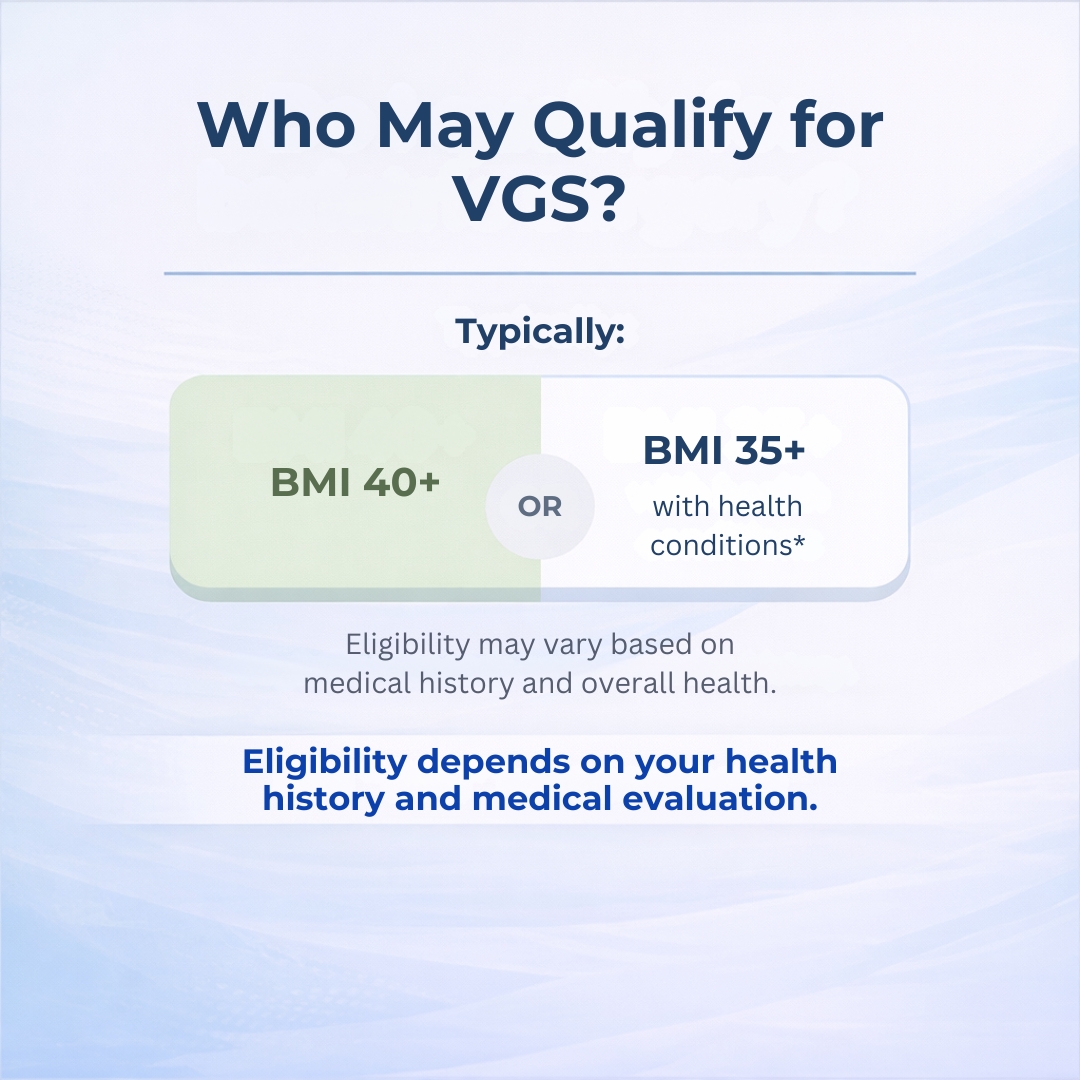
In general, patients may be considered candidates for VSG weight loss surgery if they:
- have a BMI of 40 or higher, or
- have a BMI of 35 or higher with obesity-related health conditions such as type 2 diabetes, sleep apnea, hypertension, or high cholesterol.
In some cases, patients with a lower BMI may still be evaluated depending on their health history, metabolic conditions, and overall quality of life.
The best way to understand candidacy is through a full medical evaluation. If a patient is unsure whether they qualify, reviewing who may qualify for bariatric surgery or using a BMI calculator can be a helpful starting point before speaking with a surgeon.
How Does Vertical Gastric Sleeve Surgery Work?
Vertical gastric sleeve surgery works by reducing the size of the stomach, which limits how much food can be eaten at one time. After surgery, patients usually feel full more quickly and are better able to control portion size.
Unlike some other bariatric procedures such as gastric bypass, VSG surgery does not reroute the intestines. Instead, it focuses on stomach restriction and hormonal changes related to appetite. This is one reason many patients view it as a strong weight loss procedure without the added intestinal bypass component used in other surgeries.
For patients comparing procedures, this is often an important distinction when deciding between gastric sleeve vs gastric bypass.
How Is VSG Surgery Performed?
VSG surgery is typically performed laparoscopically, which means the bariatric surgeon uses small incisions and specialized instruments rather than one large open incision. This minimally invasive approach is commonly associated with less post-operative discomfort, smaller scars, and a faster return to normal activity compared with open surgery.
During the weight loss procedure:
- Small incisions are made in the abdomen.
- A camera and surgical instruments are inserted.
- The stomach is measured to guide the size of the new sleeve.
- Most of the stomach is removed.
- The remaining stomach is shaped into a narrow sleeve.
- The incisions are closed after the procedure is completed.
In some cases, patients may also research related sleeve variations such as single incision gastric sleeve or gastric sleeve with intestinal bipartition, depending on their goals and medical needs.
What Is Recovery Like After VSG Surgery?
Recovery after VSG weight loss surgery is a gradual process. Most patients stay in the hospital for a short period and begin walking soon after surgery with guidance from the medical team. In the days and weeks that follow, the focus is usually on hydration, rest, mobility, and following the prescribed diet stages.
Patients generally move through a staged nutrition plan that may include:
- clear liquids,
- full liquids,
- pureed foods,
- soft foods,
- and eventually a more regular long-term bariatric diet.
Recovery is not only physical. Many patients also need time to adjust emotionally and mentally to new routines, portion sizes, and long-term expectations. Following healthy habits after bariatric surgery is one of the most important parts of long-term success.
How Much Weight Can You Lose After VSG Surgery?
Weight loss after VSG varies from patient to patient. Outcomes depend on factors such as starting weight, medical conditions, activity level, eating habits, follow-up care, and long-term lifestyle changes.
Many bariatric patients experience their fastest weight loss in the first several months after surgery, with continued progress over the first year and beyond. While bariatric surgery can be a powerful tool, the long-term result still depends on consistency and support.
For this reason, VSG weight loss surgery should be seen as part of a larger treatment plan, not as a stand-alone fix.
Benefits of VSG Surgery
VSG weight loss surgery is often chosen because it may offer a strong combination of weight loss support, appetite reduction, and improvement in obesity-related health concerns.
Potential benefits may include:
- smaller portion sizes,
- reduced hunger,
- meaningful long-term weight loss,
- improved mobility,
- improved energy,
- and improvement in certain obesity-related conditions.
Many patients also like that VSG surgery does not involve an intestinal bypass, which may make it appealing when compared with some other bariatric procedures.

Risks and Considerations of VSG Surgery
As with any surgery, VSG carries risks and requires long-term commitment. Patients should understand both the potential benefits and the possible downsides before deciding whether it is the right fit.
Possible risks and considerations may include:
- bleeding,
- infection,
- staple line leak,
- nausea or vomiting in the early recovery period,
- reflux in some patients,
- narrowing of the sleeve,
- and the possibility of inadequate weight loss or weight regain if long-term habits do not change.
Patients also need to follow ongoing medical guidance, nutritional recommendations, and supplement plans after surgery. Bariatric surgery works best when the patient is prepared to make permanent changes.
VSG vs Gastric Bypass
One of the most common questions patients ask is whether VSG is better than gastric bypass. The answer depends on the patient.
In general, VSG weight loss surgery is often considered by patients who want a strong weight loss procedure without intestinal rerouting. Gastric bypass may be considered in situations where a stronger metabolic effect is desired or when certain health factors suggest another approach may be more appropriate.
There is no universal best weight loss procedure for everyone. The right option depends on medical history, BMI, eating patterns, obesity-related conditions, previous surgeries, and long-term goals. That is why procedure comparison pages and surgical consultations are so important.
Are There Alternatives to VSG Surgery?
Yes. Patients exploring VSG may also consider other procedures depending on their health profile and weight loss goals. These can include:
- gastric bypass,
- gastric balloon,
- revision bariatric surgery,
- SADI-S bariatric surgery,
- and other bariatric or endoscopic procedures.
Each option has its own structure, benefits, and limitations. Patients who are still deciding may benefit from reviewing which weight loss procedure may align best with their needs before moving forward.

Answer 10 simple questions and get an educational guide to discuss with TBC.
This quiz is designed to help you understand which bariatric procedure may be worth discussing with a TBC coordinator or bariatric surgeon. It looks at your goals, BMI range, health history, previous surgery, reflux, metabolic concerns, and biggest questions.
Final Thoughts on VSG Surgery
For many patients, VSG is one of the most widely recognized weight loss procedures because it combines a more manageable stomach size with long-term lifestyle support. It is often researched by people who want to understand whether gastric sleeve surgery may be the right next step for their health.
If you are exploring VSG weight loss surgery and want to better understand whether you may be a candidate, what recovery may involve, or how the procedure compares with other bariatric options, the next step is getting clear guidance based on your specific situation.
FAQs About VSG Surgery
What does VSG stand for?
VSG stands for vertical sleeve gastrectomy, a bariatric procedure commonly known as gastric sleeve surgery. Some patients may also search for VGS, but VSG is the more accurate medical abbreviation.
Is VSG a weight loss surgery?
Yes. VSG is a weight loss surgery that reduces the size of the stomach to help patients eat smaller portions, feel full sooner, and support long-term weight loss with lifestyle changes and follow-up care.
Is VSG the same as gastric sleeve surgery?
Yes. VSG stands for vertical sleeve gastrectomy, while gastric sleeve surgery is the more common patient-friendly term for the same procedure.
How much of the stomach is removed during VSG surgery?
VSG surgery typically removes about 75% to 80% of the stomach, leaving a smaller sleeve-shaped stomach.
Who may qualify for VSG weight loss surgery?
Patients may qualify for VSG weight loss surgery based on BMI, obesity-related health conditions, medical history, and a full bariatric evaluation.
How long is recovery after VSG surgery?
Recovery varies, but most patients move through a staged healing process that includes hydration, walking, diet progression, and follow-up care.
Is VSG surgery reversible?
VSG surgery is generally considered non-reversible because part of the stomach is permanently removed.
How is VSG different from gastric bypass?
VSG surgery reduces stomach size without bypassing the intestines, while gastric bypass combines stomach reduction with intestinal rerouting.