
Many patients research gastric sleeve regrets because they want to know what life after surgery may really feel like. In many cases, regret is not about the procedure alone; it is about unrealistic expectations, difficulty adjusting to new habits, or not knowing the best way to lose weight after gastric sleeve.
The best way to lose weight after gastric sleeve is not a crash diet or a short-term reset. Long-term success usually depends on protein-first meals, hydration, smaller portions, slow eating, vitamin consistency, regular movement, and staying connected with your bariatric care team.
A study published in Obesity Surgery in 2021 indicates that many patients did not regret their decision to undergo bariatric surgery, but some wished they had more realistic expectations about results and post-surgical challenges. In other words, preparation and follow-up matter.
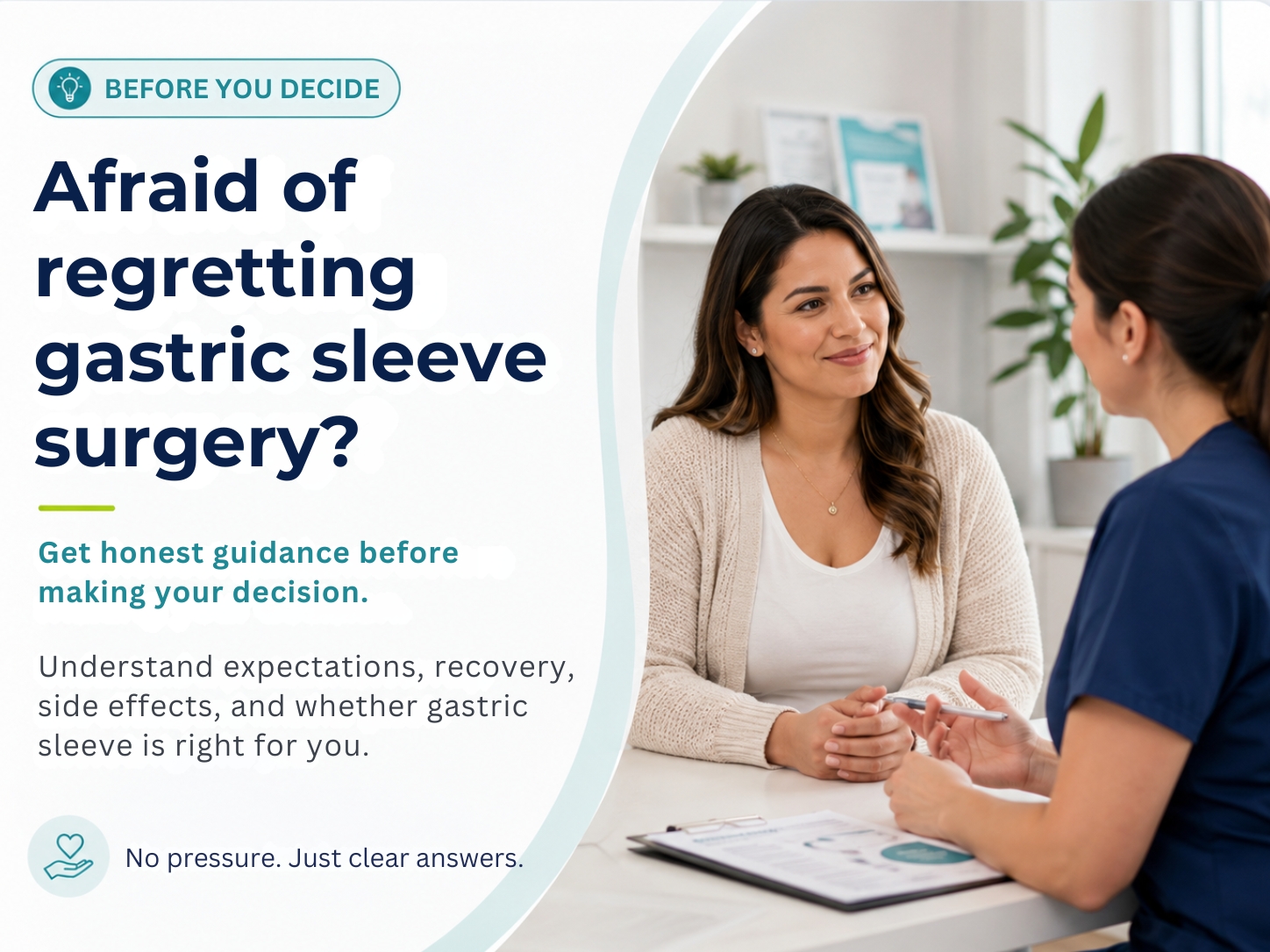
Worried About Gastric Sleeve Regrets?
You’re not alone. Many patients have questions about side effects, expectations, recovery, and the best way to lose weight after gastric sleeve. Talk with a TBC coordinator and get clear, pressure-free guidance before making your decision.
Ask Your Questions Before SurgeryQuick Answer: Best Way to Lose Weight After Gastric Sleeve
The best way to lose weight after gastric sleeve is to follow a structured bariatric plan that focuses on protein, hydration, portion control, slow eating, vitamin consistency, regular activity, and follow-up care. Gastric sleeve surgery is a powerful tool, but long-term results depend on daily habits after surgery.
- Protein first: build meals around lean protein before adding other foods.
- Hydration: sip water throughout the day and avoid drinking with meals unless your team instructs otherwise.
- Portion control: eat slowly, use smaller portions, and stop when comfortably satisfied.
- Avoid grazing: frequent snacking and liquid calories can slow progress or lead to regain.
- Stay supported: follow up with your bariatric team when weight loss stalls or habits feel difficult.
Not Sure If Gastric Sleeve Is the Right Procedure for You?
If you are worried about gastric sleeve regrets or comparing bariatric options, this short quiz can help you explore which procedure may fit your goals, health history, and weight loss needs.

Answer 10 simple questions and get an educational guide to discuss with TBC.
This quiz is designed to help you understand which bariatric procedure may be worth discussing with a TBC coordinator or bariatric surgeon. It looks at your goals, BMI range, health history, previous surgery, reflux, metabolic concerns, and biggest questions.
Are There True Gastric Sleeve Regrets After Surgery?
In a way, one could say yes. Some bariatric patients regret choosing gastric sleeves because they were disappointed about not reaching their weight loss goals. Failure to lose enough weight with gastric sleeve is a prime reason for revision surgery. However, creating a smaller new stomach via sleeve gastrectomy provides for easy conversion into gastric bypass or other bariatric procedures that have a malabsorptive component, allowing patients to lose additional excess weight.
The amount and rate at which patients drop pounds after weight loss surgery depend on factors that include:
- Age
- Biological sex
- Starting weight
- Body type
- Genetics
- Exercise habits
- Committing to a nutrition plan
You simply won't know your results until you are in the midst of your weight loss journey. That's why it's important not to create expectations before surgery so you won't have gastric sleeve regrets. Your results will be different than those of the next person, so don't measure your results against someone else's weight loss.
Instead of comparing your progress to someone else’s, focus on the habits that support your own body after surgery. For many patients, the best way to lose weight after gastric sleeve is to stay consistent with the basics: protein, fluids, movement, vitamins, and follow-up support.
Why Some Patients Feel Gastric Sleeve Surgery “Ruined My Life” — And How to Avoid That Feeling
Some people search for phrases like “gastric sleeve surgery ruined my life” when they are scared, frustrated, or trying to understand the harder side of bariatric surgery. In many cases, the issue is not the surgery itself, but unrealistic expectations, lack of emotional support, poor follow-up, difficulty adjusting to new eating habits, or not receiving enough education before surgery.
Gastric sleeve surgery is a powerful weight loss tool, but it is not a quick fix. Patients need to understand that their relationship with food, eating speed, portion sizes, hydration, vitamins, and emotional habits will change after surgery. When patients are not prepared for those changes, the adjustment can feel overwhelming.
At Tijuana Bariatric Center, we believe patients should understand both the benefits and the challenges before making a decision. The best way to reduce the risk of regret is to ask questions early, understand what life after surgery may look like, and choose a team that provides clear guidance before and after your procedure.

What You Wish You Knew Before Bariatric Surgery
Patients expressing what they wish they would have known before their surgery may be a more accurate way of expressing gastric sleeve regrets. Here are some of the most common regrets and what you can do to deal with them.
Questions to Ask Before Choosing Gastric Sleeve Surgery
One of the best ways to avoid gastric sleeve regrets is to ask the right questions before surgery. Before making your decision, consider the following:
- Do I understand that gastric sleeve is a tool, not a quick fix?
- Do I understand the best way to lose weight after gastric sleeve is based on long-term habits, not extreme dieting?
- Am I ready to change my eating habits after surgery?
- Do I understand the post-op diet and recovery process?
- Have I asked about possible side effects, such as nausea, reflux, hair loss, or food intolerance?
- Do I know what realistic weight loss results may look like for my body?
- Do I have emotional support during the first months after surgery?
- Have I talked with a coordinator about my fears before deciding?
If you are unsure about any of these questions, speaking with a bariatric care team can help you make a more informed and confident decision.
Regret #1 - Not Realizing How Much Your Relationship With Food Will Change
Eating is an emotional experience. Food is not just for survival. It's about socializing, self-reward, and often an emotional outlet. Many patients report disinterest in food, a common psychological regret, after gastric sleeve. You may want to enjoy your meals so badly, yet you find eating a chore. Getting extreme pleasure out of eating is a sign of food addiction, and if you don't change your eating habits and continue to eat junk food or overeat, you can derail your weight loss goals. Work with our bariatric dietician or a psychologist who can help repair your relationship with food.
Regret #2 - Not Learning to Eat Slowly Before Surgery
Eating too fast can make you overeat, but you'll also encounter another, bigger problem: food can get caught in your stomach pouch, causing pain. Some foods can become easily stuck, so always chew your food thoroughly before swallowing and pause between bites. Make each bite tiny and chew your food to the consistency of mashed potatoes. Eventually, this mindful practice will help you manage and enjoy eating again.
Regret #3 - Dealing With Excess Skin
Significant weight loss can bring major changes in body shape, and for some patients, one of those changes is loose or excess skin. It may become noticeable around the abdomen, arms, thighs, breasts, chest, back, or other areas as weight loss progresses.
The amount of loose skin varies considerably from person to person. Age, genetics, skin elasticity, how much weight was lost, how long the skin was stretched, smoking history, and other individual factors can all influence how the body changes after major weight loss.
Importantly, loose skin does not mean that gastric sleeve surgery failed. Bariatric surgery and plastic surgery have different goals. Gastric sleeve is designed to support weight loss and improve obesity-related health concerns. Plastic surgery after major weight loss focuses on evaluating skin and body-contour changes that may remain once the active weight-loss phase has progressed.
Loose Skin and Body Changes After Major Weight Loss
Some patients are comfortable with these changes and do not want additional treatment. Others eventually begin asking whether procedures such as a tummy tuck after gastric sleeve or broader post-bariatric body contouring could address areas that remain difficult to change through nutrition and exercise alone.
The abdomen is a common concern, but major weight loss can affect several areas at the same time. When the main concern is loose abdominal skin, a tummy tuck may be discussed. When changes involve the abdomen together with the arms, breasts, thighs, upper body, or other areas, a broader body-contouring evaluation may be more useful.
Timing also matters. Plastic surgery is generally considered as a separate stage rather than something that automatically follows bariatric surgery. Weight stability, nutrition, overall health, smoking or nicotine use, previous surgery, and individual recovery needs may all be reviewed before a surgeon recommends moving forward. The American Society of Plastic Surgeons similarly identifies stable weight, general health, nutrition, and smoking status among the factors considered for body-contouring candidates.
If loose skin becomes one of your concerns after gastric sleeve, it can help to discuss it as part of your longer-term transformation rather than seeing it as a reason to regret your weight loss. If you decide to explore your options, you can learn more about Plastic Surgery in Tijuana and request an individualized evaluation when the time is right.
Regret #4 - Experiencing Hair Loss
Hair loss is a common side effect of rapid weight loss because you eat less food and absorb fewer nutrients, thereby stressing the body. This condition is temporary. Nevertheless, it is frustrating. Hair loss typically occurs between three and six months after surgery and can last up to a year after your surgery date. To minimize hair loss, consume a minimum of 70 grams of protein for women and 80-90 grams for men daily and take the recommended vitamin supplements.
Regret #5 - Body Dysmorphia, Still Seeing an Obese Person in the Mirror
It may sound strange, but after sleeve gastrectomy you may see the new version of yourself that everyone else does, no matter how much weight you lose. Your body may change so rapidly post-surgery that your mind may not be able to comprehend the difference, especially during the first 12 months. Because of this, many people still view themselves as obese or unhealthy, no matter how much weight they have lost.

Want to See Real Gastric Sleeve Results?
Every patient’s journey is different, but seeing real before and after results can help you understand what is possible with the right procedure, guidance, and long-term commitment.
View Before & After ResultsRegret #6 - Losing Weight is Hard Work
Your healthcare provider counseled you that weight loss surgery is a tool to lose excess weight and not a magic pill, but did you think it would be that hard? Probably not. You'll have a lot to learn, like the difference between "head hunger" and true, physical hunger. You may feel like you are on an emotional rollercoaster and may question your mental health when you feel depressed over plateaus and other setbacks. Get help from mental health professionals if post-surgery blues are getting the best of you.
Regret #7 - I Didn't Sign Up for the Side Effects
Serious side effects are rare, but keep in mind that gastric sleeve is a major surgical procedure. Bariatric surgery has altered your anatomy and your stomach will need time to heal and adjust. Keep in mind that even though pesky side effects like gas pain, nausea, belching, indigestion and incision pain are pesky, most side effects are only temporary. Follow doctor recommendations to minimize discomfort.
Regret #8 - Why Didn't I Get Gastric Sleeve Surgery Sooner?
Perhaps the only regret shared among many patients is why they didn't get weight loss surgery sooner. Once patients experience significant weight loss and improvements in conditions like high blood pressure, sleep apnea, type 2 diabetes, and other metabolic concerns, they often feel they made the right decision. Having sleeve gastrectomy can be an act of self-care and an investment in your life. Following a bariatric diet, exercising, taking vitamin supplements, and adopting an overall healthy lifestyle can help you achieve long-term success in your weight loss journey.
Side effects to gastric sleeve surgery can take place, however, you do have some control in managing your operation and recovery. In any event, serious side effects are not the norm.
Frequently Asked Questions About Gastric Sleeve Regrets
What is the best way to lose weight after gastric sleeve?
The best way to lose weight after gastric sleeve is to follow a structured bariatric plan that includes protein-first meals, hydration, small portions, slow eating, vitamin consistency, regular movement, and follow-up care. Results vary by patient, but consistency after surgery is essential.
Do people regret gastric sleeve surgery?
Some patients may experience regrets after gastric sleeve surgery, especially if they had unrealistic expectations, were not prepared for lifestyle changes, or did not receive enough support after surgery. However, many patients feel their only regret is not having surgery sooner.
What are the most common gastric sleeve regrets?
Common regrets include not realizing how much eating habits would change, not learning to eat slowly before surgery, dealing with excess skin, temporary hair loss, emotional changes, and adjusting to the work required after surgery.
Can gastric sleeve surgery ruin your life?
Gastric sleeve surgery is a major medical procedure and requires long-term lifestyle changes. For some patients, the adjustment can feel overwhelming if they are not properly prepared. This is why education, realistic expectations, and follow-up support are important before and after surgery.
How can I avoid regrets after gastric sleeve surgery?
The best way to avoid regrets is to understand the procedure, ask questions before surgery, follow your post-op instructions, commit to nutrition guidelines, take recommended supplements, and seek support when emotional or physical challenges appear.
Is hair loss normal after gastric sleeve surgery?
Temporary hair loss can happen after gastric sleeve surgery, especially during periods of rapid weight loss. It usually occurs a few months after surgery and can improve with proper protein intake, vitamins, and guidance from your bariatric care team.
What should I know before choosing gastric sleeve surgery?
You should understand that gastric sleeve surgery is a tool, not a quick fix. It requires changes in eating habits, portion sizes, hydration, vitamin intake, emotional habits, and long-term follow-up.
Still Worried About Gastric Sleeve Regrets?
The best way to avoid regret is to make an informed decision. Our team can answer your questions about recovery, side effects, expectations, pricing, and whether gastric sleeve surgery is the right option for you.
Talk to a TBC Coordinator